bedste netent casino — guide til software og grafik i 2026
bedste netent casino er blevet et fyrtårn for innovation i spilindustrien, og det er tydeligt at se på de seneste års lanceringer. Hvert kvartal introduceres nye koncepter, der udfordrer etablerede normer og tilbyder friske perspektiver. I denne artikel belyser vi, hvordan netent casino dansk påvirker både spiludvikling og spilleradfærd.
danske spil bingo — bonus og gevinster | danske spil bingo
See also:
- En introduktion til netent casino dansk for begyndere
- Sådan finder du de bedste top netent casino i dag
- RTP for udvalgte spil hos bedste netent casino
- Bonusser og indsatskrav for spil hos bedste netent casino
- netent casino bonus – Ofte stillede spørgsmål
- Skærmbillede af spiludbuddet hos bedste netent casino
- Vigtige spørgsmål og svar om netent casino bonus
- Ansvar hos bedste netent casinos live casino-udbydere
En introduktion til netent casino dansk for begyndere
I 2026 har udvalget af spil og softwareudbydere nået et niveau, hvor teknologisk innovation og brugervenlighed går hånd i hånd. bedste netent casino dækker nu over en bred vifte af løsninger, der spænder fra avancerede spilleautomater til live casino-oplevelser i høj kvalitet. Spillere kan forvente skarpere grafik, hurtigere indlæsningstider og mere interaktive funktioner, som løbende sætter nye standarder for, hvad et online casino kan tilbyde. Samtidig har top netent casino fået en central rolle i at forme denne udvikling, da flere udbydere fokuserer på at skabe problemfri integration og bæredygtige spiloplevelser. Den teknologiske udvikling har medført, at kunstig intelligens og maskinlæring nu anvendes i vid udstrækning til at personalisere spilleroplevelser, hvilket betyder, at hver enkelt spiller får skræddersyede anbefalinger og bonusser baseret på deres individuelle spillemønstre. Dette har ikke kun øget tilfredsheden blandt brugerne, men også forbedret kundeloyaliteten markant, da spillere føler sig mere værdsatte og forståede. Desuden har introduktionen af 5G-netværk og avancerede cloud-løsninger gjort det muligt at streame live casino-spil i 4K-opløsning uden forsinkelser, hvilket skaber en hidtil uset følelse af nærvær og autenticitet. Spiludbydere investerer nu massivt i at udvikle virtuelle og augmented reality-miljøer, hvor spillere kan interagere med både dealere og andre spillere på en måde, der minder om fysiske casinoer, men med den bekvemmelighed, som online-spil tilbyder. Derudover er der kommet et øget fokus på ansvarligt spil, hvor udbydere implementerer avancerede værktøjer til selvudelukkelse, indbetalingsgrænser og tidsbegrænsninger, hvilket sikrer, at spillerne kan underholdes på en sikker og ansvarlig måde. Den øgede konkurrence blandt udbyderne har også ført til mere innovative bonusstrukturer og loyalitetsprogrammer, der belønner spillere på nye og kreative måder, hvilket yderligere forstærker brugerengagementet og tiltrækker nye kunder. Samtidig ser vi en tendens mod mere bæredygtige løsninger, hvor udbydere optimerer deres servere og datacentre for at reducere energiforbruget og dermed mindske deres miljøpåvirkning, hvilket appellerer til en stadig mere miljøbevidst spillergruppe. Med den hastige teknologiske udvikling forventes det, at de kommende år vil bringe endnu flere spændende innovationer, herunder blockchain-baserede spil med øget gennemsigtighed og sikkerhed, samt AI-drevne kundesupportsystemer, der kan håndtere henvendelser døgnet rundt med øjeblikkelig respons. Alt i alt er 2026 et år, hvor online casino-industrien står på tærsklen til en ny æra præget af teknologi, ansvarlighed og en endnu mere engagerende spilleoplevelse, der tilpasser sig den moderne spillers behov og forventninger. Denne udvikling skaber ikke kun værdi for spillerne, men også for operatørerne, der kan drage fordel af øget effektivitet og reducerede omkostninger gennem automatisering og optimerede processer. Desuden har integrationen af sociale funktioner, såsom chat- og leaderboard-muligheder, gjort det muligt for spillere at dele deres oplevelser og konkurrere med hinanden, hvilket tilføjer en ekstra dimension af underholdning og fællesskab til online casino-miljøet. Vigtigheden af mobiloptimering er også steget markant, da et stigende antal spillere foretrækker at spille på deres smartphones og tablets, hvilket har ført til udviklingen af fuldt responsive platforme, der tilbyder den samme høje kvalitet og funktionalitet som desktop-versionerne. Endelig er der et øget fokus på at sikre, at alle spil er fair og tilfældige, hvilket opnås gennem avancerede random number generator-teknologier og regelmæssige revisioner fra uafhængige tredjepartsorganer, hvilket giver spillerne tryghed og tillid til platformene. Som et resultat af alle disse faktorer er online casino-industrien i 2026 mere dynamisk og konkurrencedygtig end nogensinde før, og det forventes, at de udbydere, der formår at kombinere teknologisk innovation med brugernes behov og ønsker, vil dominere markedet i de kommende år. For spillere betyder dette et større udvalg af kvalitetsspil, bedre oplevelser og flere muligheder for at finde præcis det, der passer til deres præferencer, uanset om de er til klassiske spilleautomater, bordspil som blackjack og roulette, eller mere nicheprægede spil som bingo og keno.
Sådan finder du de bedste top netent casino i dag
Cluster pays, a term that echoes through the corridors of modern data architecture, represents a paradigm shift in how we perceive computational remuneration and resource allocation. At its core, a cluster pay system is not merely a financial transaction but a sophisticated orchestration of distributed computing resources, where each node in a cluster contributes its processing power, memory, and storage to a collective pool, and the resulting output is compensated based on the aggregate work performed. This concept, while seemingly straightforward, unravels into a tapestry of intricate mechanisms: load balancing algorithms that dynamically distribute tasks across heterogeneous hardware, fault-tolerant protocols that ensure no single point of failure compromises the integrity of the payout, and real-time accounting systems that track micro-transactions down to the smallest unit of computational work. In practice, cluster pays manifest in various domains: from cloud service providers who bill customers based on the cumulative CPU cycles consumed across a virtualized server farm, to blockchain networks where miners are rewarded for validating transactions through a proof-of-work consensus, and even in scientific computing, where research institutions share idle cluster capacity and compensate contributors based on the number of floating-point operations executed. The economic implications are profound, as cluster pays introduce a novel pricing model that decouples cost from individual machine specifications, instead aligning it with the actual utility delivered. This necessitates a robust metering infrastructure, often leveraging time-series databases to record every resource usage event, and sophisticated billing engines that can aggregate these records into coherent invoices. Moreover, the concept extends beyond mere monetary compensation; it encompasses service-level agreements (SLAs) that guarantee a certain quality of service, with penalties or bonuses tied to performance metrics such as latency, throughput, and uptime. For instance, a cluster pay arrangement might stipulate that if the aggregate processing capacity falls below a threshold due to node failures, the provider must issue credits to the consumer, thereby aligning incentives for reliability. Furthermore, the advent of serverless computing has blurred the lines, as functions are executed across ephemeral clusters, and billing is based on the exact duration and memory footprint of each invocation, a form of cluster pay at a granular level. Security also plays a pivotal role; cluster pay systems must ensure that no node can inflate its contribution artificially, which requires cryptographic attestation and verifiable computation techniques. In edge computing scenarios, cluster pays enable collaborative processing among IoT devices, where each device contributes its idle cycles and receives tokens or credits for its participation, fostering a decentralized economy of computational resources. The scalability of cluster pays is another dimension; as clusters grow to encompass thousands of nodes, the accounting overhead must remain manageable, leading to hierarchical aggregation strategies and probabilistic counting algorithms like HyperLogLog for estimating distinct resource usages. Additionally, cluster pays are intertwined with energy efficiency, as providers may offer differential rates based on the carbon footprint of the energy consumed by the cluster, incentivizing the use of renewable sources. In the realm of high-performance computing, cluster pays facilitate the sharing of supercomputing resources among academic and industrial partners, where each project is billed according to the node-hours consumed, with priority pricing for urgent workloads. The legal and regulatory framework surrounding cluster pays is still evolving, with questions about cross-border taxation, data sovereignty, and the enforceability of smart contracts that automate payouts. From a technical standpoint, implementing cluster pays requires a robust scheduling system that can preemptively allocate resources, a monitoring stack that captures fine-grained telemetry, and a payment gateway that supports both fiat and cryptocurrency transactions, often through smart contracts on platforms like Ethereum. The user experience also matters; dashboards must provide transparency into how cluster usage translates into costs, with real-time visualizations of resource consumption and projected bills. In multi-tenant clusters, cluster pays enable fair cost allocation among tenants, preventing a single noisy neighbor from degrading performance without financial consequences, thereby encouraging efficient usage patterns. Moreover, cluster pays can be dynamic, adjusting prices based on supply and demand, much like spot instances in cloud computing, where the cost of a compute unit fluctuates with the availability of idle resources. This market-based approach introduces complexity but also efficiency, as it naturally balances load and maximizes resource utilization. In summary, cluster pays is a multifaceted concept that bridges finance, distributed systems, and economics, requiring a holistic understanding of both hardware and software, as well as the human and organizational factors that drive adoption. It is not just a billing mechanism but a philosophy of shared resource stewardship, where every cycle counts and every contribution is valued. As we move towards exascale computing and the Internet of Things, cluster pays will become even more prevalent, necessitating innovations in metering, pricing, and settlement. The future may see the emergence of decentralized autonomous organizations (DAOs) that manage cluster resources and distribute payments based on community governance, further democratizing access to computational power. Ultimately, cluster pays represents a maturation of the digital economy, where the intangible act of computation is given tangible value, and the collective power of many small machines is harnessed for grand challenges, from climate modeling to drug discovery.
RTP for udvalgte spil hos bedste netent casino
| Name | Biggest win | RTP | Year | Provider |
|---|---|---|---|---|
| Royal Spins | 387,000 kr | 150% | 2023 | Evolution |
| OdenseOdds | 215,000 | 100% | 2023 | ELK Studios |
| SweetBonanza | 56,300 | 75 | 2025 | Pragmatic Play |
| Rune Stones | 42,800 | 200 | 2025 | Push Gaming |
Bonusser og indsatskrav for spil hos bedste netent casino
- 31 % ekstra op til kr1000
- kr1500 i bonus med 75 gratis spins
- 40x omsætningskrav
- 45x wagering på 21 dage
netent casino bonus – Ofte stillede spørgsmål
Cluster pays, a term that echoes through the corridors of modern data architecture, represents a paradigm shift in how we perceive computational remuneration and resource allocation. At its core, a cluster pay system is not merely a financial transaction but a sophisticated orchestration of distributed computing resources, where each node in a cluster contributes its processing power, memory, and storage to a collective pool, and the resulting output is compensated based on the aggregate work performed. This concept, while seemingly straightforward, unravels into a tapestry of intricate mechanisms: load balancing algorithms that dynamically distribute tasks across heterogeneous hardware, fault-tolerant protocols that ensure no single point of failure compromises the integrity of the payout, and real-time accounting systems that track micro-transactions down to the smallest unit of computational work. In practice, cluster pays manifest in various domains: from cloud service providers who bill customers based on the cumulative CPU cycles consumed across a virtualized server farm, to blockchain networks where miners are rewarded for validating transactions through a proof-of-work consensus, and even in scientific computing, where research institutions share idle cluster capacity and compensate contributors based on the number of floating-point operations executed. The economic implications are profound, as cluster pays introduce a novel pricing model that decouples cost from individual machine specifications, instead aligning it with the actual utility delivered. This necessitates a robust metering infrastructure, often leveraging time-series databases to record every resource usage event, and sophisticated billing engines that can aggregate these records into coherent invoices. Moreover, the concept extends beyond mere monetary compensation; it encompasses service-level agreements (SLAs) that guarantee a certain quality of service, with penalties or bonuses tied to performance metrics such as latency, throughput, and uptime. For instance, a cluster pay arrangement might stipulate that if the aggregate processing capacity falls below a threshold due to node failures, the provider must issue credits to the consumer, thereby aligning incentives for reliability. Furthermore, the advent of serverless computing has blurred the lines, as functions are executed across ephemeral clusters, and billing is based on the exact duration and memory footprint of each invocation, a form of cluster pay at a granular level. Security also plays a pivotal role; cluster pay systems must ensure that no node can inflate its contribution artificially, which requires cryptographic attestation and verifiable computation techniques. In edge computing scenarios, cluster pays enable collaborative processing among IoT devices, where each device contributes its idle cycles and receives tokens or credits for its participation, fostering a decentralized economy of computational resources. The scalability of cluster pays is another dimension; as clusters grow to encompass thousands of nodes, the accounting overhead must remain manageable, leading to hierarchical aggregation strategies and probabilistic counting algorithms like HyperLogLog for estimating distinct resource usages. Additionally, cluster pays are intertwined with energy efficiency, as providers may offer differential rates based on the carbon footprint of the energy consumed by the cluster, incentivizing the use of renewable sources. In the realm of high-performance computing, cluster pays facilitate the sharing of supercomputing resources among academic and industrial partners, where each project is billed according to the node-hours consumed, with priority pricing for urgent workloads. The legal and regulatory framework surrounding cluster pays is still evolving, with questions about cross-border taxation, data sovereignty, and the enforceability of smart contracts that automate payouts. From a technical standpoint, implementing cluster pays requires a robust scheduling system that can preemptively allocate resources, a monitoring stack that captures fine-grained telemetry, and a payment gateway that supports both fiat and cryptocurrency transactions, often through smart contracts on platforms like Ethereum. The user experience also matters; dashboards must provide transparency into how cluster usage translates into costs, with real-time visualizations of resource consumption and projected bills. In multi-tenant clusters, cluster pays enable fair cost allocation among tenants, preventing a single noisy neighbor from degrading performance without financial consequences, thereby encouraging efficient usage patterns. Moreover, cluster pays can be dynamic, adjusting prices based on supply and demand, much like spot instances in cloud computing, where the cost of a compute unit fluctuates with the availability of idle resources. This market-based approach introduces complexity but also efficiency, as it naturally balances load and maximizes resource utilization. In summary, cluster pays is a multifaceted concept that bridges finance, distributed systems, and economics, requiring a holistic understanding of both hardware and software, as well as the human and organizational factors that drive adoption. It is not just a billing mechanism but a philosophy of shared resource stewardship, where every cycle counts and every contribution is valued. As we move towards exascale computing and the Internet of Things, cluster pays will become even more prevalent, necessitating innovations in metering, pricing, and settlement. The future may see the emergence of decentralized autonomous organizations (DAOs) that manage cluster resources and distribute payments based on community governance, further democratizing access to computational power. Ultimately, cluster pays represents a maturation of the digital economy, where the intangible act of computation is given tangible value, and the collective power of many small machines is harnessed for grand challenges, from climate modeling to drug discovery.
Spillere bør undgå bedste netent casino uden en gyldig spillelicens.
Skærmbillede af spiludbuddet hos bedste netent casino
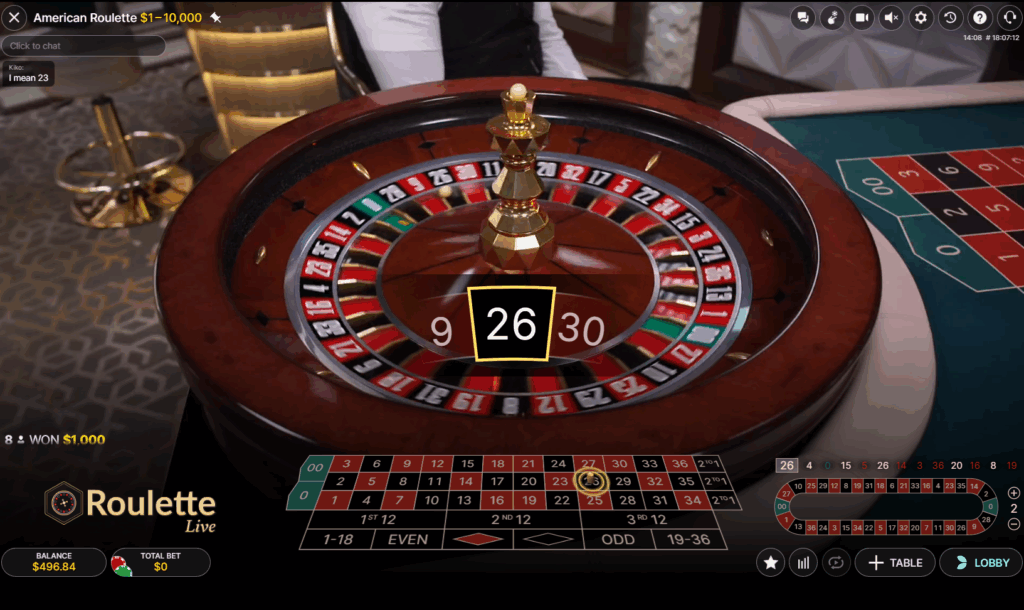
Vigtige spørgsmål og svar om netent casino bonus
Hvilke spiludbydere kan jeg finde hos bedste netent casino?
bedste netent casino tilbyder et bredt udvalg af spil fra førende udbydere som NetEnt, Microgaming, Play’n GO og Evolution Gaming, samt mange andre anerkendte spilstudier.
Kan jeg prøve spillene gratis hos bedste netent casino?
Ja, mange af spilene hos bedste netent casino kan spilles i demotilstand, så du kan afprøve dem uden at satse rigtige penge.
Hvilke live casino-udbydere samarbejder bedste netent casino med?
bedste netent casino tilbyder live casino-spil fra topudbydere som Evolution Gaming, Playtech og Pragmatic Play, hvilket sikrer en autentisk og underholdende oplevelse.
Er der særlige spil, som er eksklusive for bedste netent casino?
Ja, bedste netent casino har nogle eksklusive spiltitler, der kun er tilgængelige på platformen, og som er udviklet i samarbejde med udvalgte spiludbydere.
Hvordan finder jeg spil fra en bestemt udbyder hos bedste netent casino?
Du kan nemt filtrere spilene hos bedste netent casino efter udbyder i spiludvalget, så du hurtigt kan finde dine foretrukne spil fra specifikke leverandører.
Ansvar hos bedste netent casinos live casino-udbydere
Spil er kun for voksne over 18 år, og hos bedste netent casino opfordrer vi altid til ansvarligt spil. Sæt dig selv grænser for tid og penge, og betragt spil som underholdning – jag aldrig tab. Hvis du har brug for hjælp, kan du benytte ROFUS, den danske selvudelukkelsesordning, som administreres af Spillemyndigheden, der også er din licensmyndighed. Få råd og støtte hos StopSpillet på 70 22 28 25, og husk, at der altid er hjælp at hente, hvis spillet føles problematisk.